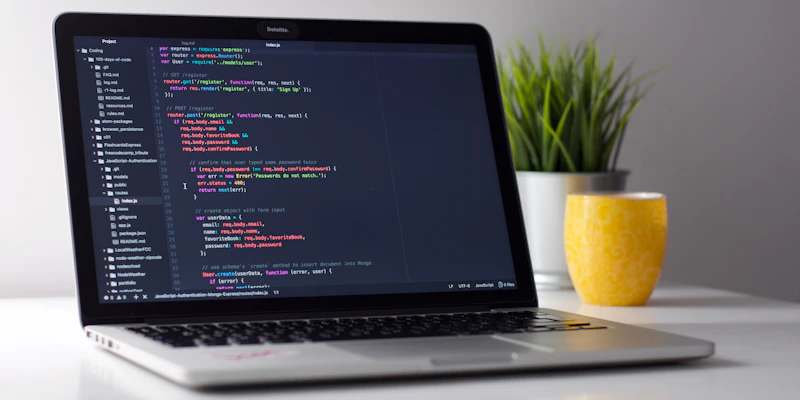
Did you know that about 80% of coding bootcamp grads land developer jobs within six months and make over $70,000 to start? If you’ve been wondering whether full stack web development bootcamps online can fast-track your tech career, the short answer is yes—if you pick the right one and put in the work. These programs can turn beginners into job-ready developers in months instead of years.
Learn more in our remote coding bootcamps with mentorship guide.
Learn more in our free coding bootcamps that actually work guide.
Learn more in our coding bootcamps financing options guide.
Learn more in our coding bootcamp job placement rates comparison guide.
Learn more in our coding bootcamps for non tech backgrounds guide.
Learn more in our mobile app development bootcamps guide.
Learn more in our full stack developer bootcamp guide.
If you can code a little or just want to switch careers fast, keep reading. Here’s everything you need to know.
What Makes Full Stack Bootcamps Essential?
Full stack bootcamps teach you both front-end and back-end development in just 12–24 weeks. You’ll learn HTML, CSS, and JavaScript for the front end, plus React to make user interfaces pop. On the back end, expect Node.js, Python, and database training—usually MongoDB, PostgreSQL, or MySQL.
For more on this topic, see our guide on coding bootcamp.
But the real secret sauce? You’ll build real-world apps. Imagine shipping an entire e-commerce site or task tracker from scratch. Those portfolio projects are what get you interviews.
The difference between a bootcamp and a four-year CS degree isn’t just time—it’s focus. Traditional degrees cover theoretical computer science, algorithm proofs, and academic exercises. Bootcamps skip straight to the tools employers actually use on day one. That gap is exactly what makes them so effective for career switchers.
AI is shaking up the 2026 developer market. As tools like GitHub Copilot and ChatGPT become standard, employers now want hybrid devs—people who handle both front and back ends and understand AI integrations. From what I’ve seen, that versatility is a total major advantage.
Bootcamps have started weaving AI tooling directly into their curricula. Programs like Fullstack Academy now include modules on prompt engineering, integrating APIs like OpenAI into web apps, and using Copilot responsibly to speed up development. Knowing when to lean on AI and when to write your own logic is quickly becoming a baseline expectation.
Which Top Online Bootcamps Deliver Results?
Not all bootcamps are equal. Here are the ones consistently proving they’re strong options:
- Fullstack Academy: A 19-week immersive program focused on React and Node. It boasts a 91% job placement rate and strong alumni at major tech firms.
- App Academy: Offers a free upfront model through an Income Share Agreement (ISA). Pay only after landing a job. The 24-week program reports 90% employment.
- BloomTech (formerly Lambda School): Charges deferred tuition of up to $21,000 but offers flexible pacing and focuses on full stack JavaScript (MERN).
Bootcamp Comparison Table
| Bootcamp | Price | Duration | Job Guarantee | Tech Stack | Placement Rate |
|---|---|---|---|---|---|
| Fullstack Academy | $19,910 | 19 weeks | Partial refund if not hired | MERN (MongoDB, Express, React, Node) | 91% |
| App Academy | $0 upfront (ISA 15% salary) | 24 weeks | Yes | MERN | 90% |
| BloomTech | $21,000 deferred | Flexible | Yes | JavaScript (MERN) | 86% |
| Coding Dojo | $10,495 | 14–28 weeks | No | Python, MERN, Java | 82% |
These are the ones most frequently mentioned by grads on Reddit and LinkedIn. Honestly, Fullstack Academy’s balance of cost and placement rate makes it a straightforward choice for many.
One thing the table doesn’t capture: career support quality. App Academy’s career coaching includes mock technical interviews, resume reviews, and recruiter introductions. That hands-on placement help often matters more than raw placement percentages. Always ask a bootcamp exactly what “placement support” looks like before you sign anything.
How Much Do These Bootcamps Really Cost?
The average tuition for a full stack program lands between $10,000 and $20,000. For example, Fullstack Academy charges $19,910, while Coding Dojo is around $10,495.
You don’t always have to pay everything upfront. Many bootcamps now offer:
- Upfront discounts (save 10–15% by paying early)
- Income Share Agreements (ISAs) — pay 15% of your salary only after you make $50K+
- Scholarships or diversity grants
ISAs sound attractive, but read the fine print carefully. Some agreements cap repayment at 1.5x tuition, which is fair. Others have longer repayment windows of three to five years with no cap. Run the math both ways before committing to one over an upfront payment.
Several bootcamps also partner with third-party lenders like Climb Credit or Skills Fund. These lenders specialize in financing education programs and often offer better rates than personal loans. If you go this route, aim for a loan term that keeps your monthly payment under 10% of your expected starting salary.
Learn more in our part time coding bootcamps for working professionals guide.
The ROI can be impressive. If you land a $75K junior developer job, you could recoup tuition within 6–9 months. CompTIA reports that tech salaries have grown 7% year-over-year—so that’s a serious long-term payoff.
Don’t overlook hidden costs either. Budget for a reliable laptop ($1,000–$1,500 if you don’t have one), a stable internet connection, and potentially software subscriptions. Some bootcamps also charge a small application fee or require purchasing textbooks. These extras can add up to $500–$800 on top of tuition, so plan for them upfront.
What Will You Learn Week-by-Week?
Bootcamps move fast. Expect a structured, hands-on schedule:
- Weeks 1–4: Learn HTML, CSS, JavaScript, and responsive design. You’ll use Flexbox and CSS Grid to make layouts shine.
- Weeks 5–8: Dive into React on the front end, Node and Express for the back end, and set up MongoDB databases.
- Weeks 9+: Build capstone projects, deploy them to AWS or Heroku, and prep for interviews.
The pacing is intentionally intense. Week one might feel manageable, but by week three you’re debugging asynchronous JavaScript at midnight. That’s not a warning—it’s a preview of what the job actually feels like. Bootcamps simulate real developer pressure on purpose.
Core Skills Checklist
By the end, you should know how to:
- Use Git and GitHub for version control
- Design RESTful APIs
- Handle authentication with JWT
- Write unit tests with Jest
- Set up deployment pipelines
In my experience, these projects and tools make the difference. Employers want proof you can build, break, and fix code on your own.
Most bootcamps also touch on TypeScript in the final weeks, which has become nearly universal in professional JavaScript codebases. Even a basic understanding of static typing will make you a stronger candidate than grads who only know vanilla JS. If your program doesn’t cover it, carve out time to learn it independently.
How to Choose Your Perfect Bootcamp?
The best bootcamp for you depends on lifestyle and goals.
- Match your schedule: Full-time bootcamps run about 40 hours a week. If you’re working, pick part-time or flexible pacing programs.
- Check outcomes: Aim for schools with verified placement rates of 85% or higher. Bonus points if grads land at companies like Google, Meta, or Spotify.
- Try free previews: Bootcamps such as Fullstack Academy and App Academy offer entry tests and free practice modules. Treat them like auditions—they’ll show you both the challenge and style.
Here’s the thing: you’ll know within a week whether the full-time pace suits you or if you need something more flexible.
Accreditation is another factor worth checking. While bootcamps aren’t accredited the same way universities are, some states have begun requiring bootcamps to register with education oversight boards. A school that’s transparent about its legal standing and has verifiable outcome reports is a safer bet than one that only showcases cherry-picked success stories.
Talk to at least three alumni before enrolling anywhere. Most bootcamps will connect you with grads on request, and LinkedIn searches make it easy to find them independently. Ask specifically about the career support, the quality of instructors, and whether they’d enroll again knowing what they know now. Honest answers from real people beat any marketing page.
How to Maximize Bootcamp Success?
A bootcamp’s only as good as your hustle. To make the most of it:
- Build at least five GitHub projects. Clone real apps—Airbnb, Trello, or Instagram—to stand out.
- Network early. Join your bootcamp’s Discord, attend virtual career fairs, and connect with alumni on LinkedIn.
- Prep for interviews. Practice 100+ LeetCode problems and record mock interviews.
So many grads skip this last step and wonder why callbacks stall. Interview prep is as much a project as coding itself.
Start your job search before you graduate—not after. Reach out to hiring managers at small-to-mid-size companies while you’re still in the program. Smaller startups and agencies are often more open to bootcamp grads than large enterprises, and getting your name in front of them early gives you a head start by graduation day.
Your README files matter more than most people realize. Recruiters and hiring managers skim GitHub profiles constantly. A well-written README that explains what a project does, what stack it uses, and how to run it locally signals professionalism immediately. Treat every project README like a short cover letter for that specific app.
What to Expect After Graduation
The first job search after a bootcamp is almost always harder than expected. Most grads apply to 50–100 positions before landing their first offer. That’s not discouraging—it’s just the realistic window you should plan for.
Junior developer roles are competitive, but the demand is real. Bureau of Labor Statistics data projects software developer employment to grow 25% through 2031, which is significantly faster than average. Bootcamp grads are increasingly filling that gap at companies that can’t afford to wait for four-year graduates.
Your first role might not be your dream role. Many bootcamp grads start at agencies, small SaaS companies, or as contractors. That’s fine. Twelve months of real-world experience closes the gap between bootcamp grad and mid-level developer faster than any program can. The key is getting that first job and shipping real code.
Keep learning after you graduate. The developers who grow fastest are the ones who treat the bootcamp as a launchpad, not a finish line. Pick up TypeScript, explore cloud platforms like AWS or Google Cloud, and stay curious about what’s changing in the ecosystem. That habit compounds quickly over a career.
Conclusion
If you’re serious about switching careers fast, full stack web development bootcamps online are your shortcut to a tech job that actually pays. Start by shortlisting three schools from this guide—Fullstack Academy, App Academy, and BloomTech are solid starting points.
Next, complete their free prep courses or admission challenges this week. You could be building your first shipped app in under six months. And honestly, that’s an easy place to start worth chasing.

